More
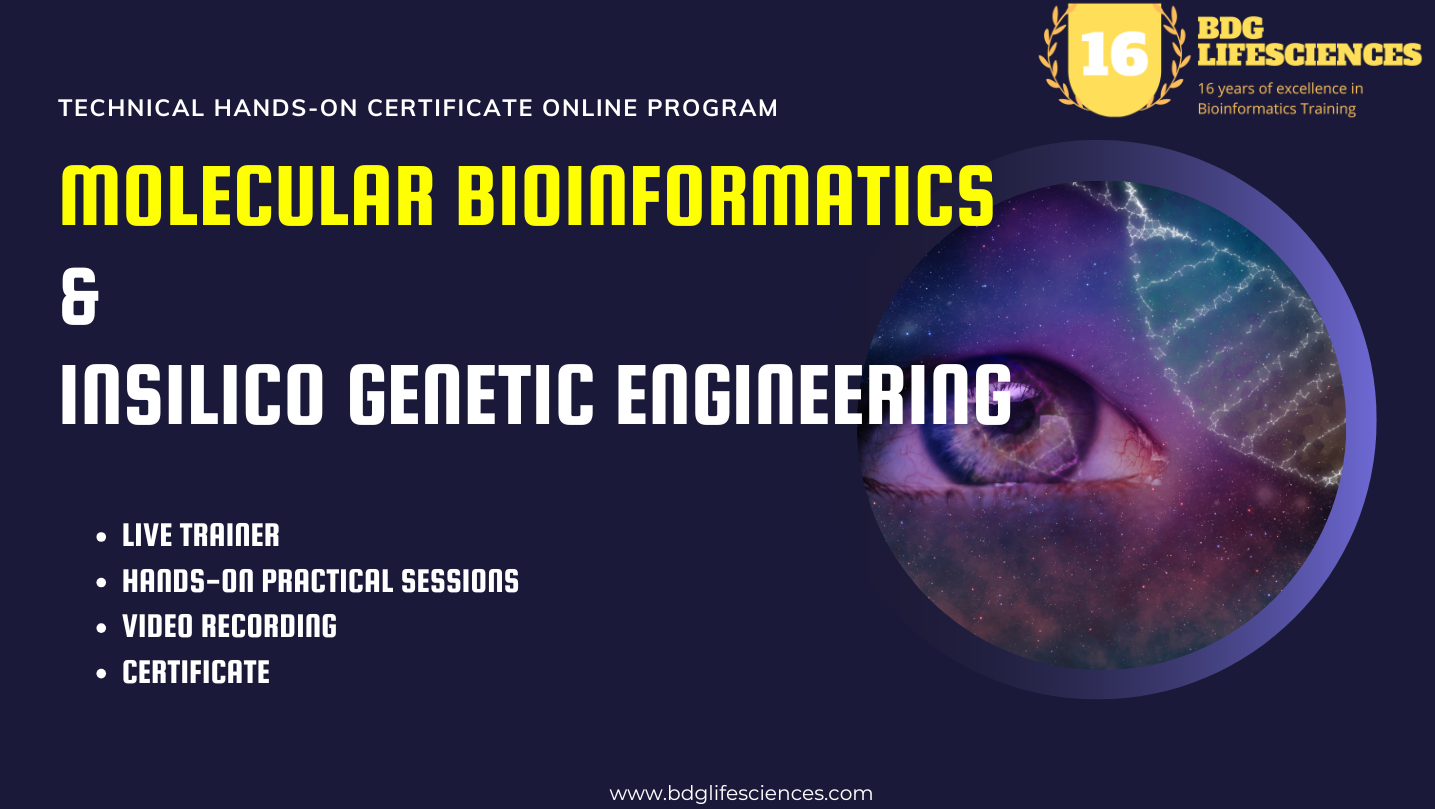
Molecular Bioinformatics & In Silico Genetic Engineering for High School Students
10-Day Live Program with Case Studies: From DNA Sequences to Protein Modeling and Gene Editing Strategies
4.7
This Event Includes
- High demand video
- Learn from Experts
- Hands-on practical sessions
- Certificate on completion
Registration Fee |
|
In US $ |
172 |
Molecular Bioinformatics and In Silico Genetic Engineering represent the future of modern biology—where scientists use computational tools to understand genes, analyse mutations, predict protein behaviour, and design genetic strategies before moving into laboratory experiments.
Today, breakthroughs in genetics, biotechnology, precision medicine, gene therapy, and CRISPR-based technologies increasingly depend on the ability to analyse biological information digitally. Scientists no longer begin every experiment in the laboratory; they first explore genetic sequences, predict biological outcomes, and design strategies using computational approaches.
BDG Lifesciences' 10-Day Molecular Bioinformatics & In Silico Genetic Engineering Program introduces high school students to this exciting intersection of molecular biology, computational biology, and genetic engineering through live, instructor-led practical training.
Across ten interactive 90-minute Zoom sessions, students follow the complete journey of a gene—from DNA sequence analysis and gene structure prediction to protein modelling, mutation analysis, and genetic engineering strategy design. Rather than learning concepts only from textbooks, students experience the same computational workflows that researchers use to investigate genes and proteins.
The program begins with the foundations of molecular biology, covering DNA structure and replication, RNA transcription, protein translation, and gene expression. Students learn how biological information flows from DNA to functional proteins and apply this understanding through practical activities involving nucleotide sequence retrieval and Open Reading Frame (ORF) prediction.
Students then explore how genes are organised and regulated within genomes through exon prediction, splice site prediction, and promoter analysis. They investigate RNA biology through RNA sequence retrieval, RNA structure prediction, and SNP (Single Nucleotide Polymorphism) analysis, gaining insight into how genetic variations can influence biological function and disease.
The program progresses into protein analysis, where students learn about primary and secondary protein structures, functional domains, protein modelling, and mutation analysis. Through computational structural biology approaches, students discover how changes in DNA sequences can affect protein structure and potentially alter biological outcomes.
Students are also introduced to computational genetic engineering concepts, including primer designing, restriction mapping, gene silencing strategies, and advanced SNP interpretation. These sessions provide a foundation for understanding how scientists plan and design genetic experiments before laboratory implementation.
The final three sessions transform learning into application through three structured gene-based case studies. Students apply the complete computational workflow—from sequence retrieval and gene analysis to structural and functional interpretation—similar to the approach followed by researchers working in genetics and biotechnology.
This program is designed for high school students interested in:
- Genetics and molecular biology
- Biotechnology and biomedical engineering
- Gene editing and CRISPR technologies
- Medicine and disease research
- Science fair projects
- Future careers in life sciences and computational biology
Sessions are delivered by trainers with research backgrounds in bioinformatics, computational biology, molecular modelling, genomics, and genetic engineering applications. Several trainers have experience mentoring students toward science fair achievements, research projects, and peer-reviewed scientific publications.
Every session includes written learning summaries and recordings for revision. Students who successfully complete the program receive a Certificate of Completion from BDG Lifesciences.
The program also serves as a strong foundation for students interested in progressing toward advanced areas such as CRISPR, gene editing, computational genomics, and BDG Lifesciences' mentored research programs, where students can develop independent research projects under expert guidance.
Why High School Students Should Join This Program?
Explore the Future of Genetics Before University
Genetic engineering, biotechnology, and personalised medicine are among the fastest-growing areas of modern science. The scientists of tomorrow will not only need to understand biology—they will need to understand how biological information is analysed, interpreted, and designed using computational technologies.
This program gives high school students an early introduction to the tools and concepts shaping the future of medicine and biotechnology.
Move Beyond Textbook Biology Into Real Scientific Workflows
Traditional biology education often explains genes, DNA, and proteins through theory. This program allows students to experience how scientists actually study biological systems.
Students learn how researchers analyse DNA sequences, predict gene structures, investigate mutations, model proteins, and design genetic strategies using computational approaches.
This transforms biology from a subject studied in classrooms into a practical scientific discipline.
Build Strong Foundations for Future Research
Starting research skills early provides students with a significant advantage when entering university and advanced STEM programs.
This course helps students build foundational knowledge in:
- Molecular biology concepts
- Genetic analysis approaches
- Computational biology workflows
- Protein structure interpretation
- Mutation analysis
- Genetic engineering strategies
These foundations prepare students for future research experiences, undergraduate projects, internships, science competitions, and advanced biotechnology education.
Develop Skills Relevant to CRISPR and Gene Editing
CRISPR and gene editing technologies have transformed modern biology. However, successful genetic engineering requires a strong understanding of genes, sequences, mutations, proteins, and computational design strategies.
This program introduces the fundamental concepts students need before entering advanced gene editing research, helping them understand how scientists analyse and plan genetic modifications.
Strengthen Science Fair Projects and University Applications
Students interested in science fairs, STEM competitions, or university admissions can benefit from exposure to advanced scientific concepts beyond the standard school curriculum.
The practical knowledge gained through this program can help students develop stronger research ideas, communicate scientific concepts more effectively, and demonstrate genuine engagement with emerging technologies.
Learn From Researchers and Scientists
Students are guided by trainers with experience in bioinformatics, genomics, molecular modelling, computational biology, and biotechnology research.
The program provides not only technical knowledge but also insight into how professional scientists approach biological questions and solve real-world problems.
Gain Early Exposure to Future STEM Careers
This program introduces students to career pathways in:
- Biotechnology
- Genetic engineering
- Biomedical research
- Computational biology
- Genomics
- Drug discovery
- Precision medicine
- Artificial intelligence in healthcare
Early exposure allows students to make better-informed decisions about future education and career choices.
Frequently Asked Questions (FAQs)
What is Molecular Bioinformatics and In Silico Genetic Engineering?
Molecular Bioinformatics combines molecular biology with computational tools to analyse DNA, RNA, proteins, and genetic information. In Silico Genetic Engineering refers to the use of computer-based approaches to study genes, predict biological outcomes, and design genetic strategies before laboratory experiments.
This program introduces students to how modern scientists use computational methods in genetics, biotechnology, and biomedical research.
Is this program suitable for high school students with no prior experience?
Yes. The program is specifically designed for high school students and begins with fundamental concepts of DNA, genes, proteins, and molecular biology.
No previous experience in bioinformatics, programming, or genetic engineering is required. Students are guided step-by-step from foundational concepts to advanced computational workflows.
Do students need coding or programming knowledge?
No. Students do not need prior programming experience.
The program focuses on understanding and applying computational biology tools used for genetic analysis, sequence interpretation, protein modelling, and genetic engineering planning.
What is the difference between this program and BDG's Bioinformatics: Basics to Advanced course?
The two programs introduce different aspects of computational biology.
The Molecular Bioinformatics & In Silico Genetic Engineering Program focuses specifically on molecular biology and genetic engineering workflows, including:
- Gene structure analysis
- ORF prediction
- Exon and splice site prediction
- Promoter analysis
- RNA analysis
- SNP interpretation
- Protein mutagenesis
- Primer designing
- Restriction mapping
- Gene silencing strategies
- Gene-based case studies
The Bioinformatics: Basics to Advanced Program provides a broader introduction to bioinformatics, including biological databases, sequence alignment, phylogenetics, genome browsing, protein interactions, and structural biology tools.
What computational skills will students gain from this program?
Students gain practical understanding of:
- DNA sequence analysis
- ORF prediction
- Gene structure prediction
- Exon and splice site analysis
- Promoter prediction
- RNA sequence and structure analysis
- SNP analysis
- Protein structure prediction
- Functional domain analysis
- Homology modelling
- Protein mutagenesis analysis
- Primer designing
- Restriction mapping
- Gene silencing strategy development
What are the case studies included in the final three sessions?
The final three sessions include structured gene-based case studies where students apply the complete computational workflow.
Students work through the process of analysing genetic information, including sequence retrieval, gene analysis, protein interpretation, structural understanding, and biological significance.
These case studies help students understand how computational approaches are used in real scientific investigations.
Is this program useful preparation for CRISPR and gene editing?
Yes. This program provides essential foundations for students interested in CRISPR and genetic engineering.
Before designing genetic modifications, researchers must understand genes, DNA sequences, mutations, proteins, and computational analysis approaches. This course introduces these concepts and prepares students for more advanced gene editing research.
Can this program help students with science fair projects?
Yes. Students can apply concepts learned in this program to develop ideas related to genetics, molecular biology, biotechnology, computational biology, and biomedical research.
The program also serves as preparation for BDG Lifesciences' advanced mentored research programs where students can develop independent research projects.
How long is the program and how are sessions conducted?
The program runs for 10 consecutive days, with one live 90-minute session each day conducted through Zoom.
Each session includes explanations, demonstrations, practical learning activities, written summaries, and access to recordings for revision.
Will students receive a certificate after completing the program?
Yes. Students who successfully complete the program receive a Certificate of Completion from BDG Lifesciences.
The certificate can be added to academic portfolios, university applications, STEM profiles, and future resumes.
Are session recordings provided?
Yes. All sessions are recorded and shared with participants.
Students can revisit lessons, review demonstrations, and reinforce their understanding after the program.
What computer requirements are needed?
Students require:
- A laptop or desktop computer
- Stable internet connection
- Zoom access
- Modern web browser
No specialised laboratory equipment or previous software installation is required.
What is the program fee and what does it include?
The program fee is USD $172.
It includes:
- Ten live 90-minute instructor-led sessions
- Practical demonstrations
- Written session summaries
- Access to recordings
- Three structured gene-based case studies
- Certificate of Completion from BDG Lifesciences
Why is the registration fee charged in Australian Dollars (AUD) if the program fee is listed in USD?
Registration and payment are processed through Humanitix, our Australian payment platform.
The ticket price displayed in AUD during checkout represents the equivalent USD program fee based on the prevailing exchange rate at the time of payment.
Who should join this program?
This program is ideal for high school students who are curious about:
- Genetics
- Biotechnology
- Medicine
- Gene editing
- Molecular biology
- Artificial intelligence in healthcare
- Scientific research
It is especially valuable for students who want to build an early foundation for future research and careers in life sciences.
How To Register
To secure your spot:
- Click on Register Now button and proceed.
- After registering, please email to info@bdglifesciences.com with your preferred start date and choose one of the following time slots: 5 AM–9 AM or 5 PM-9:30 PM EDT/CDT/PDT.
- Once you register, please allow us 2-5 working days to make your training schedule, i.e. dates and time.
- For any further queries, feel free to email us at info@bdglifesciences.com
⚠️ Important Eligibility Notice
This program has been exclusively designed for High School Students (typically Grades 8–12 or equivalent) and their parents.
If you are a university student, researcher, faculty member, working professional, or belong to any category other than a high school student, please do not register for this program. BDG Lifesciences offers separate training programs specifically designed for undergraduate students, postgraduate students, researchers, faculty members, and industry professionals.
Please ensure you are registering for the correct program before completing your payment.
Registration fees for this program are strictly non-refundable and non-transferable. Registrations made by participants outside the intended eligibility criteria may be cancelled without refund or transfer to another program.
To get regular updates on Upcoming Job opportunities, Research Projects, Courses, Training and Trainings, kindly join our WhatsApp Channel / Telegram
You should also read the Terms & Conditions page as well as the FAQs page. For any assistance kindly chat with our AI Assistant BioBot on the website www.bdglifesciences.com
