More
Why Multi-Omic Integration is the New Standard for 2026
14 Apr , 2026
For years, the "Genomic Revolution" was the North Star of biotech. We believed that if we could just map the DNA—the blueprint of life—we could solve every disease.
But as we enter 2026, the industry is reaching a consensus: The blueprint is not the building.
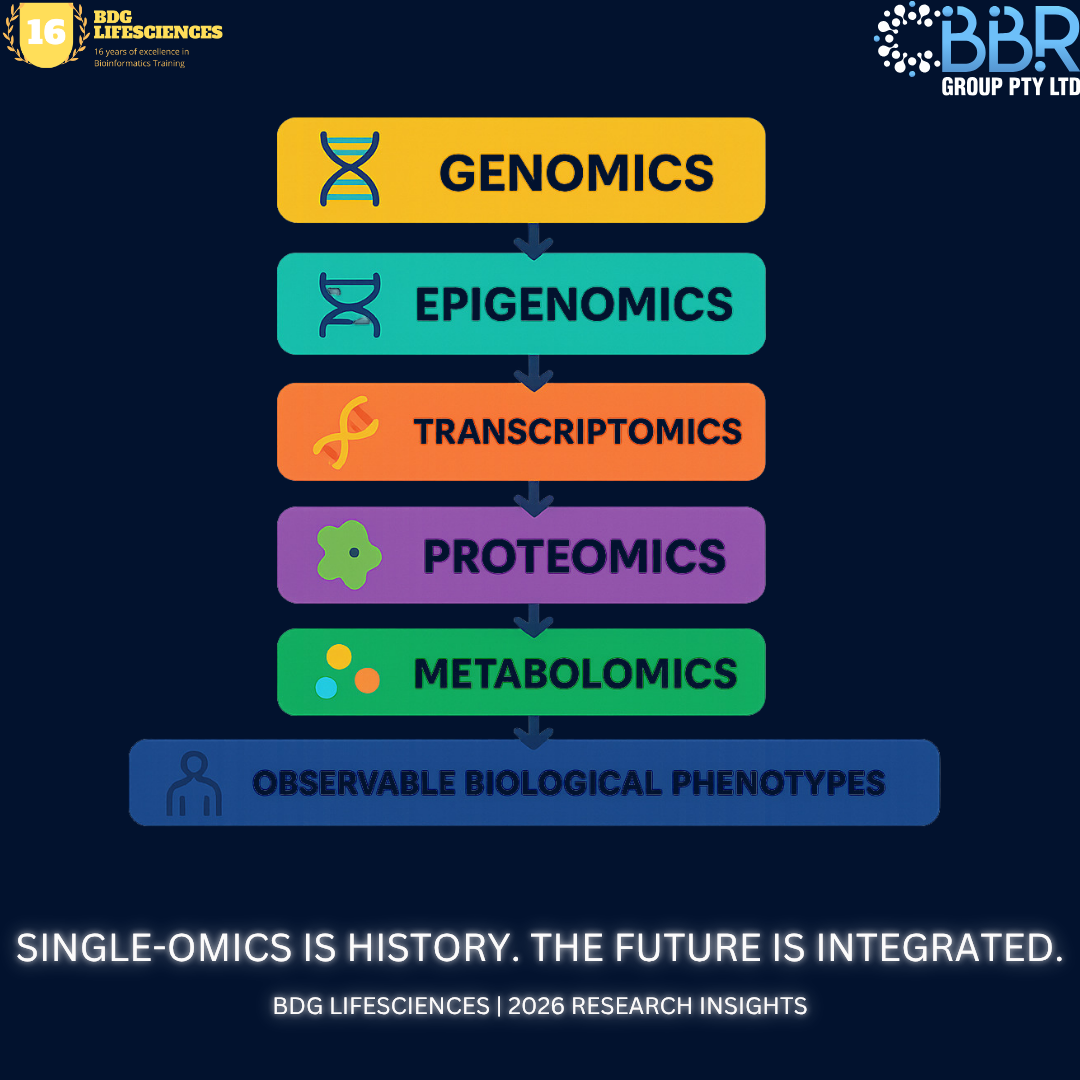
DNA tells us what might happen. To understand what is actually happening in a patient’s body, we must look at the dynamic layers above it: the Transcriptome, the Proteome, and the Metabolome.
The Limitation of "Siloed" Data Single-omics studies are like looking at a single frame of a movie. You might see a character holding a key (a genetic mutation), but you don’t know if they are going to unlock a door or throw it away. Multi-omics provides the full film.
How BDG LifeSciences is Bridging the Omics Gap:
1. Connecting Genotype to Phenotype: By integrating Genomics with Proteomics, we can see if a genetic risk factor actually results in a dysfunctional protein. This is critical for validating drug targets and reducing the "90% failure rate" in clinical trials.
2. Single-Cell Precision: 2025 saw a massive leap in single-cell multi-omics. We can now analyze how individual cells in the same tumor behave differently, allowing for "Ultra-Precision" oncology.
3. Real-Time Metabolomics: While DNA is static, metabolites change in minutes. Integrating metabolomic data allows us to monitor how a patient is responding to a drug in real-time, enabling truly personalized dosing.
The 2026 Challenge: Data Harmony The biggest bottleneck isn't getting the data; it’s making it talk to each other. Multi-omics datasets are massive and heterogeneous. At BDG, we are utilizing Graph-based AI algorithms to transform these siloed "data lakes" into unified molecular maps.
The future of medicine isn't just "precision"—it’s integrated.
Is your research still stuck in a single-omics silo? Follow BDG LifeSciences for the latest strategies in Multi-Omic data integration and bioinformatics.