More
Whole Exome Sequencing & Variant Analysis Certificate Workshop Online
The only workshop combining complete WES SNP/INDEL analysis of human genomes with rigorous clinical variant interpretation using ACMG-AMP guidelines and real human genomic datasets.
4.7
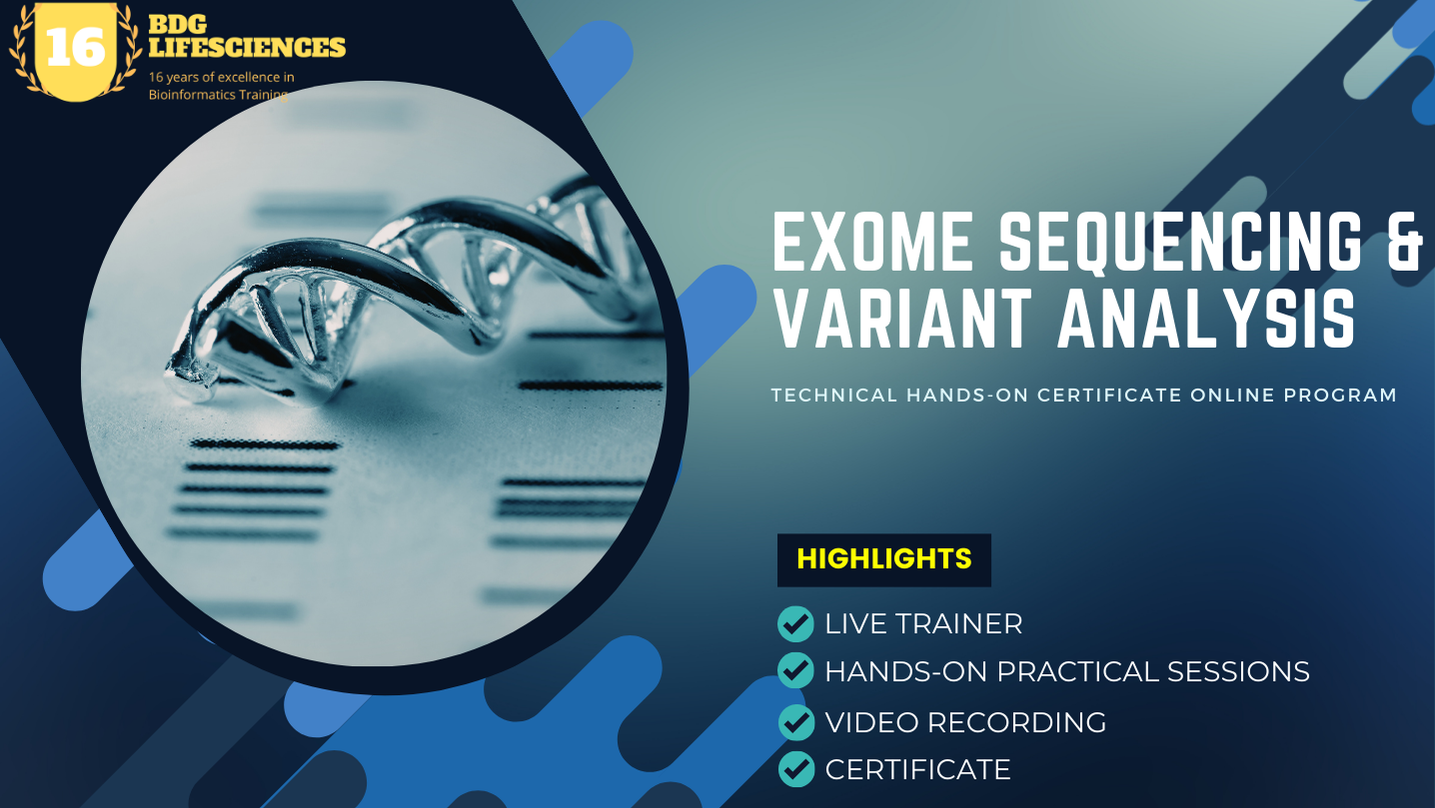
This Event Includes
- High demand video
- Learn from Experts
- Hands-on practical sessions
- Certificate on completion
Registration Fee |
|
In US $ |
$ 99 |
In Indian Rupees |
₹ 9549 |
Understanding the Field
What Is Whole Exome Sequencing & Clinical Variant Analysis?
Whole Exome Sequencing (WES) is the targeted sequencing of all protein-coding regions of the human genome — the exome — which represents approximately 1–2% of the total genome but contains over 85% of disease-causing mutations. By focusing sequencing power on the most functionally relevant portion of the genome, WES delivers cost-effective, clinically actionable insights that are transforming rare disease diagnosis, oncology, and personalized medicine.
Variant Analysis is the computational and clinical process of identifying, annotating, classifying, and interpreting the genetic variants discovered through WES. A raw WES experiment yields thousands of variants — the critical skill is systematically evaluating each variant against clinical databases, functional evidence, and international standards (ACMG-AMP guidelines) to determine which are pathogenic, benign, or of uncertain significance.
Together, WES data analysis and clinical variant interpretation form the complete skill pipeline for human genomics — from raw sequencing data to a clinical genetics report. This workshop is the first program to deliver both in a single, integrated 5-day course with live expert instruction and real human genome datasets.
Workshop Dates
16 to 20 October, 2026. Live trainer will take online sessions from 6 PM - 7:30 PM London time (GMT +01:00) on Zoom
From Raw WES Data to Clinical Report — in 5 Days
- Process real WES data from raw FASTQ to variant VCF files
- Call and filter SNPs and INDELs from human exome data
- Annotate variants using clinical databases and effect predictors
- Classify variants using ACMG-AMP international guidelines
- Interpret variants in the context of clinical genetics and disease
- Understand variant reporting formats used in clinical practice
- Apply real clinical genetics software tools used in diagnostics labs
- All analyses on your own computer — no institutional server needed
WES Data Analysis Pipeline
The Complete WES-to-Clinical-Report Pipeline
This workshop walks you through every step of the full WES analysis pipeline — from raw sequencing data to annotated, classified, and clinically interpreted variants ready for reporting.
WES SNP/INDEL Analysis Pipeline — Module 1 → Module 2
📁 Raw FASTQ- WES Data → 🔍 Data- Quality QC → 🗺️ Alignment- to Exome → 📊 Alignment- QC → ⚡ SNP & INDEL- Variant Calling → 🏷️ Gene- Annotation → 🔮 Effect- Prediction → ⚖️ ACMG-AMP-Classification → 📋 Clinical Report
Why This Workshop Is Unique
Why We Combined WES Analysis & Variant Interpretation into One Program
WES data analysis and clinical variant interpretation are two sides of the same coin — understanding one without the other is incomplete. This is the only program that delivers both, from computational pipeline to clinical report.
🔗 The Complete Clinical Genomics Skill Set- WES pipeline skills without variant interpretation is incomplete. Variant interpretation without pipeline knowledge is disconnected. Together, you gain the full workflow used in clinical genomics laboratories.
💰 Exceptional Value — Two Programs, One Fee- Previously available as two separate workshops, this combined program gives you both skill sets at a fraction of the combined cost — maximum career impact per investment.
🏥 Directly Applicable to Clinical Practice- ACMG-AMP guidelines, variant reporting, and clinical genetics interpretation are skills directly used in molecular diagnostics labs, clinical genomics departments, and precision medicine programs.
🌍 Internationally Standardized Training- ACMG-AMP variant classification is the global standard used by diagnostic labs worldwide — making the skills from this workshop internationally applicable from day one.
Program Overview
What This WES & Variant Analysis Workshop Covers
A 5-day intensive online training program covering the complete WES bioinformatics pipeline and comprehensive clinical variant analysis — from raw human genome data to ACMG-classified, clinically reported variants.
⏱️ 60–90 Mins Live Daily- Five days of focused, interactive live sessions — progressing from WES data QC through to full clinical variant interpretation and reporting.
💻 Real Human Genome Data- Work with real WES data from human genomes — not synthetic examples. The same data types used in clinical genomics labs and academic research settings.
🔴 Live BDG Lifesciences Experts- All sessions are conducted live by BDG Lifesciences' experienced bioinformatics team headed by Dr. Bharti — a clinical computational biologist with 18+ years of experience — conducts every session live — real-time instruction, immediate troubleshooting, and Q&A throughout every session.
⚖️ ACMG-AMP Guidelines Included- Dedicated training in internationally standardized ACMG-AMP variant classification — a critical skill for clinical genetics, diagnostic labs, and precision medicine.
🎥 Session Recordings Included- All 5 sessions are recorded and shared after class via YouTube for self-paced revision — revisit any analysis step anytime.
🏅 Certificate on Completion- Earn a BDG Lifesciences certificate covering both modules — with a unique barcode for independent verification and global recognition.
5-Day Schedule
Day-by-Day Workshop Schedule
Five structured days progressing from WES data QC and alignment through variant calling, annotation, and full clinical variant interpretation using ACMG-AMP guidelines.
01. WES Foundations & Data QC | Module 1 begins — pipeline setup
- Introduction to Whole Exome Sequencing & human exome
- WES experimental design & sequencing data formats
- Raw WES data Quality Control — FASTQ assessment
- Read preprocessing & adapter trimming
02. Alignment & Variant Calling | Module 1 — WES pipeline
- Alignment of WES reads to human reference genome
- Alignment QC — coverage, mapping rate, duplicate assessment
- SNP & INDEL variant calling from aligned WES data
- VCF file generation, filtering, and quality evaluation
03. Variant Annotation & Effect Prediction | Module 1 → Module 2 bridge
- Gene annotation of WES-called SNPs and INDELs
- Variant annotation — ClinVar, dbSNP, gnomAD, OMIM
- Variant effect prediction — SIFT, PolyPhen-2, CADD scores
- Introduction to variant types and clinical significance framework
04. ACMG-AMP Classification | Module 2 — clinical interpretation
- ACMG-AMP guidelines — evidence criteria and classification framework
- Applying ACMG criteria to real variant cases
- Interpreting Variants of Uncertain Significance (VUS)
- Clinical genetics software tools for variant analysis
05. Clinical Reporting & Integration | Module 2 — clinical genetics practice
- Variant interpretation in clinical genetics context
- Clinical variant report structure and content standards
- Practical: Full WES-to-report workflow integration
- Q&A: Clinical career applications and advanced pathways
System Requirement: Any OS — Windows, Mac (macOS), or Ubuntu/Linux — with a stable internet connection. All software and tool installation is guided by the trainer from Day 1.
Software & Platforms
Clinical Genomics Tools & Databases You Will Learn
Gain hands-on proficiency with the clinical genomics tools, variant databases, and analysis platforms used in molecular diagnostics laboratories, academic genomics centers, and clinical genetics departments worldwide.
🔍 WES Data QC & Preprocessing Tools- Quality assessment and preprocessing tools for raw WES FASTQ data — adapter trimming, quality filtering, and QC reporting to prepare data for alignment. Data Quality Control
🗺️ Human Genome Alignment Tools- WES read alignment tools for mapping sequencing reads to the human reference genome — with coverage analysis, duplicate marking, and alignment quality assessment. WES Alignment
⚡ SNP & INDEL Variant Callers- Variant calling tools for detecting SNPs and INDELs from WES alignment files — including variant filtering, quality scoring, and VCF output for downstream annotation. Variant Calling
🗄️ Clinical Variant Databases- ClinVar, OMIM, HGMD, dbSNP, and gnomAD — the essential clinical databases for variant classification, disease association, population frequency, and pathogenicity evidence. ClinVar · OMIM · gnomAD
🔮 Variant Effect Prediction Tools- SIFT, PolyPhen-2, CADD, REVEL, and other computational predictors for assessing the functional impact of missense variants — essential evidence in ACMG-AMP classification. SIFT · PolyPhen · CADD
⚖️ Clinical Genetics Software- Real-world clinical genetics and variant analysis software tools used in molecular diagnostics laboratories — hands-on training with the platforms actually used in clinical practice. Clinical Diagnostics Tools
What You Will Achieve
Learning Outcomes After This Workshop
By Day 5, you will have independently executed a complete WES bioinformatics pipeline and performed rigorous clinical variant interpretation using internationally standardized ACMG-AMP guidelines.
- Execute a Complete WES Pipeline- Run a full WES analysis independently — from raw FASTQ data through QC, alignment, SNP/INDEL calling, and annotation on your own computer.
- Call & Filter SNPs and INDELs- Apply variant calling tools to human exome data, generate VCF files, and apply quality filters to produce analysis-ready variant sets.
- Annotate Variants with Clinical Databases- Systematically annotate variants using ClinVar, OMIM, gnomAD, and HGMD — linking each variant to disease associations and population frequency data.
- Apply ACMG-AMP Classification- Classify variants into the five ACMG-AMP tiers — applying evidence criteria systematically to reach defensible, reproducible classification outcomes.
- Produce a Clinical Variant Report- Understand clinical variant reporting standards and produce a structured variant report suitable for clinical genetics practice.
- Earn a Comprehensive Certificate- Receive a BDG Lifesciences certificate covering both WES analysis and clinical variant interpretation — a uniquely complete credential for your career portfolio.
Your Expert Instructor
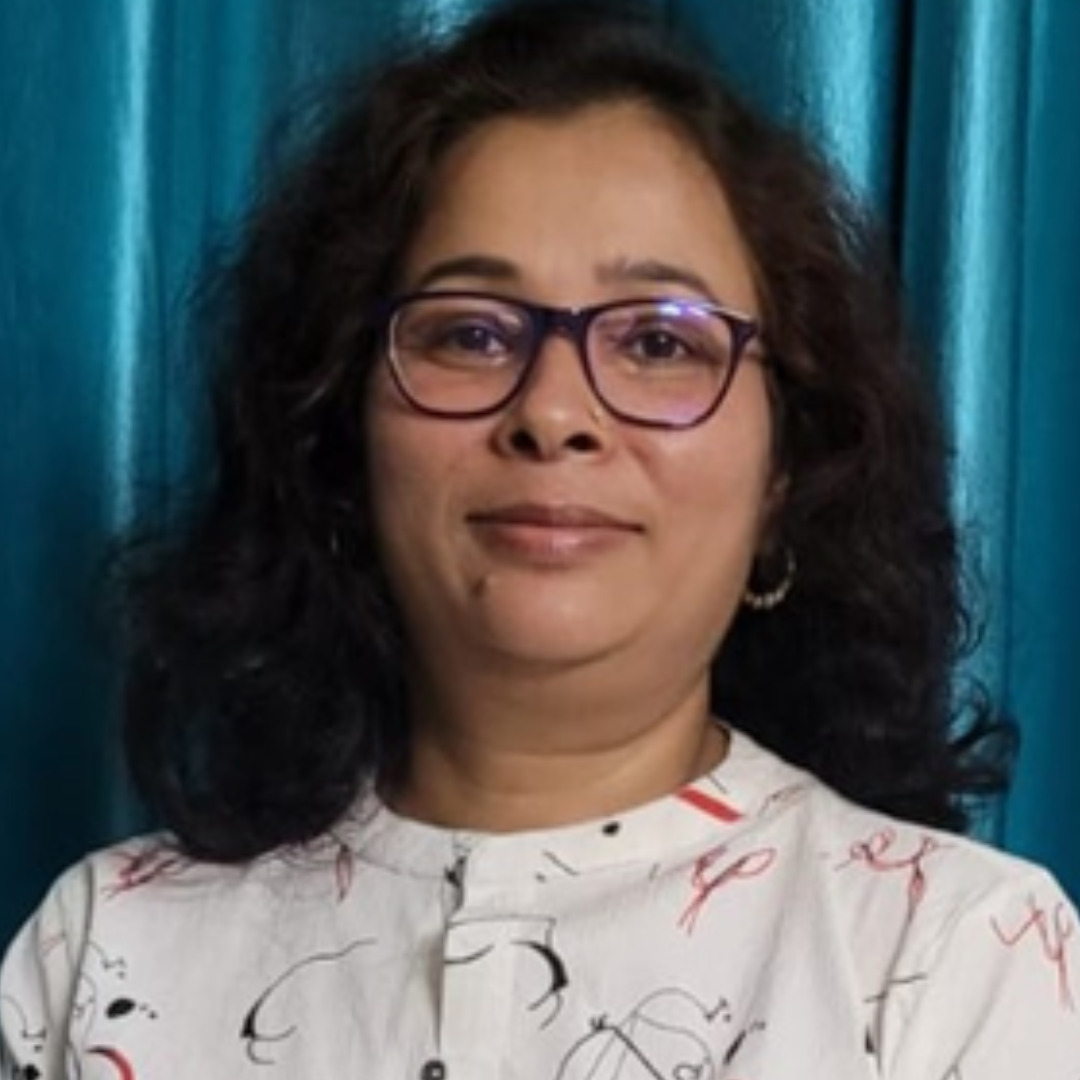
Meet Dr. Bharti
Learn clinical genomics from someone who has actually worked in clinical settings — with real patients, real diagnostic challenges, and real OMICS data..
👩🔬 Dr. Bharti occupies a rare professional position: she is simultaneously a clinical expert and a computational biologist — with direct experience handling clinicians, patients, and complex genomic data in real healthcare environments. Over her 18-year career, she has developed deep expertise in Molecular Genetics, Transplant Immunology, and Hemato-oncology, bringing a clinical depth to her bioinformatics teaching that no purely academic trainer can replicate.
Her hands-on clinical background spans CAR-T cell therapy, Mesenchymal stem cell therapy, DC & NK cell therapy, and histocompatibility typing — making her uniquely qualified to teach NGS applications in precisely the healthcare specialties this workshop covers. She has extensive practical experience with multiple OMICS platforms for clinical diagnostics and translational research, and builds strong professional networks between clinicians and computational biologists.
🧬 Molecular Genetics 🫀 Transplant Immunology 🩸 Hemato-oncology 💉 CAR-T Cell Therapy 🔬 OMICS Diagnostics 🧫 Histocompatibility Typing
18+ Years Experience
Clinical Patient-Facing Background
OMICS Multi-Platform Expert
90%+ Positive Feedback
Who Should Attend
This Workshop is Designed For
From genomics students to clinical geneticists and diagnostic lab professionals — this program delivers the complete WES-to-clinical-report skill set across all experience levels.
🎓 Students & Faculty
- B.Sc., M.Sc. & Ph.D. students in genomics, bioinformatics & genetics
- Researchers performing WES in academic labs
- Biotechnology & molecular biology students
- Human genetics & medical genetics students
- Life sciences researchers seeking clinical genomics skills
🏭 Industry & Bioinformatics Professionals
- Bioinformatics analysts in genomics companies
- Biotech & pharma professionals in genomics R&D
- NGS laboratory scientists wanting bioinformatics skills
- Variant analysts in diagnostic service laboratories
- Computational biologists entering clinical genomics
🏥 Clinical & Healthcare Professionals
- Clinical geneticists and genetic counselors
- Molecular diagnostics and pathology laboratory scientists
- Clinical genomics and precision medicine professionals
- Oncologists and clinicians using genomic data
- Rare disease researchers and clinicians
No prior WES or variant analysis experience required. This workshop is designed for all skill levels — from complete beginners to experienced bioinformaticians wanting to add clinical variant interpretation and ACMG-AMP skills to their profile.
Career Impact
How This Workshop Advances Your Career
Clinical genomics and variant interpretation are among the fastest-growing specializations in healthcare and life sciences — and WES analysis with ACMG-AMP skills are among the most sought-after capabilities in this field.
- Molecular Diagnostics & Clinical Genetics Labs- WES pipeline skills and ACMG-AMP variant classification are directly used in molecular diagnostics and clinical genetics laboratories — making this workshop directly applicable to roles in these settings.
- Rare Disease Genomics Research- WES is the primary sequencing approach for rare and undiagnosed disease programs globally — making WES bioinformatics and variant interpretation skills essential for rare disease research careers.
- Oncology & Cancer Genomics- Somatic variant analysis from tumor exome sequencing, variant effect prediction, and clinical interpretation are core skills in clinical oncology genomics programs and cancer genomics research.
- Precision Medicine & Pharmacogenomics- Variant classification and interpretation skills underpin personalized medicine programs — from genotype-phenotype correlations to pharmacogenomic variant identification for drug prescribing decisions.
- Genetic Counseling & Clinical Genomics- Understanding WES data analysis and ACMG-AMP variant classification is increasingly expected of genetic counselors working in clinical genomics, prenatal, and hereditary cancer settings.
- Bioinformatics Roles in Genomics Companies- Bioinformatics analysts at genomics companies, CROs, and diagnostic service labs are expected to perform WES pipeline analysis and variant classification as core job functions.
Why Choose Us
Why Choose BDG Lifesciences for Transcriptomics Training?
Since 2010, BDG Lifesciences has delivered research-quality NGS, WES, and genomics bioinformatics training to 2,000+ participants across 40+ countries — with a consistent 4.7/5 participant rating.
✓ The Only WES + Variant Analysis Combined Program- No other training provider offers WES bioinformatics pipeline training combined with ACMG-AMP clinical variant interpretation in a single workshop — making this the most complete clinical genomics training available.
✓ ACMG-AMP Guidelines — Globally Standardized- ACMG-AMP training is rare in online workshops. This program provides structured, hands-on ACMG-AMP criteria application using real variant cases — the gold standard for clinical variant classification globally.
✓ Real Human Genome WES Data Throughout- All analyses use real human exome sequencing data — not synthetic examples. The same data types used in clinical diagnostics labs and published genomics research.
✓ Live Expert Training + Recordings- Live sessions ensure real-time guidance and Q&A. Recordings ensure no analysis step is ever missed — the most effective hybrid training format for complex bioinformatics workflows.
✓ Verified Certificate with Unique Barcode- A BDG Lifesciences certificate covering both WES analysis and ACMG-AMP variant interpretation — with a unique barcode for independent verification. A credible credential recognized globally.
Registration Fee
Simple, Transparent Pricing
One fee for all participants. No hidden charges. Includes live sessions, session recordings, and completion certificate.
$ 99 US Dollars — same for all participants | Register Now →
Registration is non-refundable and non-transferable. Please read the full T&C below before registering.
FAQs
Frequently Asked Questions
Everything you need to know about the WES & Variant Analysis combined workshop.
What is Whole Exome Sequencing (WES) and why is it clinically important?
Whole Exome Sequencing (WES) sequences all protein-coding regions of the human genome — approximately 1–2% of the total genome that contains over 85% of known disease-causing variants. WES is widely used in rare disease diagnosis, cancer genomics, pharmacogenomics, and precision medicine because it delivers clinically actionable genomic data at lower cost than whole genome sequencing, while focusing on the most functionally relevant regions.
What are ACMG-AMP guidelines and why are they essential training?
The ACMG-AMP Standards and Guidelines for the Interpretation of Sequence Variants (Richards et al., 2015) are the internationally accepted framework for classifying genomic variants into five tiers — Pathogenic, Likely Pathogenic, Variant of Uncertain Significance (VUS), Likely Benign, and Benign. These guidelines are used by clinical genetics laboratories, molecular diagnostics departments, and clinical genomics programs worldwide. Proficiency in applying ACMG-AMP criteria is a required competency for roles in clinical molecular genetics, molecular diagnostics, and genetic counseling globally.
Do I need prior bioinformatics or clinical genetics experience?
No prior bioinformatics, WES analysis, or clinical genetics experience is required. Module 1 begins with WES fundamentals and builds step-by-step through the full pipeline. Module 2 starts with variant types and builds systematically to ACMG-AMP classification and reporting. The expert team provides live guidance throughout, and all tools are introduced from scratch during the sessions.
What is the difference between WES and WGS (Whole Genome Sequencing)?
Whole Genome Sequencing (WGS) sequences the entire genome — including coding and non-coding regions. Whole Exome Sequencing (WES) targets only the protein-coding exonic regions — approximately 1–2% of the genome. WES is more cost-effective and computationally efficient than WGS for clinical applications where the primary interest is protein-coding variants. WGS provides more complete coverage including non-coding regulatory regions and structural variants but at higher cost and computational demand. BDG Lifesciences offers a dedicated WGS workshop separately — see the Related Workshops section below.
What databases and tools will I use in this workshop?
Module 1 uses WES QC tools, human genome alignment tools, SNP/INDEL variant callers, and annotation tools connected to ClinVar, dbSNP, gnomAD, and OMIM. Module 2 uses SIFT, PolyPhen-2, CADD, and REVEL for effect prediction, plus clinical genetics software tools for variant classification and reporting. All tools are introduced and guided by the expert team — no pre-installation required before Day 1.
Are sessions recorded and what if I miss a session?
Yes. All 5 sessions are recorded and shared after class via YouTube using the Gmail ID you register with. If you miss a session, you can complete all corresponding tasks using the recording. The program is fully self-paced for revision.
Will I receive a certificate after completing this workshop?
Yes. Upon successfully completing all practical tasks across both modules, you will receive a BDG Lifesciences certificate of completion via email. The certificate carries a unique barcode for independent verification and covers both WES SNP/INDEL analysis and ACMG-AMP clinical variant interpretation — making it one of the most comprehensive genomics variant analysis certificates available from any single training provider.
How does this workshop relate to BDG Lifesciences' WGS and NGS workshops?
This workshop focuses on Whole Exome Sequencing (WES) — targeted sequencing of coding regions — combined with clinical variant analysis. BDG Lifesciences also offers a dedicated WGS (Whole Genome Sequencing) Analysis workshop covering full genome SNP/INDEL analysis, and an NGS Healthcare Applications workshop covering RNA-Seq, metagenomics, and infectious disease genomics. Each workshop is designed to stand alone or complement the others for participants building a comprehensive NGS bioinformatics skill set.
Registration
How To Register
Secure your spot in 3 simple steps — seats are limited for each batch.
1️⃣ Click Register Now- Click the Register Now button and select number of tickets you want to buy..
2️⃣ Check Your Confirmation Email- After successful payment, check your email for a confirmation with registration details and next steps.
3️⃣ Receive Your Zoom Link- Once registration closes, you'll receive the Zoom meeting link and be added to the workshop WhatsApp group.
📧 Need help? Email us at workshops@bdglifesciences.com or chat with our AI Assistant George at bdglifesciences.com
T & C
- For this event the Fee is same for all participants which is $ 99 US equivalent to 9549 Indian Rupees.
- Please provide a GMAIL ID for registration as the recorded video session will be provided on YouTube. Kindly provide that email ID by which you use YouTube.
- Video recording of each session will be provided at the end of the session to give the user a unique learning experience.
- Interactive training sessions will be conducted on Google Meet/Zoom so to give users a better learning experience.
- As it is with a LIVE TRAINER hence practical application, i.e., the experiments/tasks to be performed can be done in the best explainable manner.
- In this Online Workshop, there will be a LIVE trainer who will solve queries along with training.
- The program is SELF-PACED. After each session video of that particular session will be shared with you so you can go through as many times as you want and perfect yourself in the topics & tasks.
- If you miss any session then NO PROBLEM you can still perform the tasks by going through the video of that particular session.
- Make sure you register under the right category. If you register under the wrong category then your registration will be invalid and NO REFUND WILL BE MADE IN THIS CASE. This is your mistake and the company is not responsible for it.
- To avoid this do read the description of the ticket before selecting and proceeding with payment.
- You need to upload your professional ID which can be your Student ID Card or Research Institute ID Card or Company ID Card. DO NOT UPLOAD EXPIRED ID OR ANY GOVERNMENT ID LIKE AADHAR, PAN, you have to upload professional ID.
- If you are currently not employed or not studying, you may upload the professional ID from your previous affiliation (degree or company), provided you are registering under the correct category. If you are in India, or will be in India at the time of the workshop or training or research project, your category will be Participants in India, and you can upload any valid ID (including one from your previous affiliation). If, at the time of the workshop or training or research project, you are not in India, your category will be Participants outside India, and you can upload any valid ID.
- After registration, you will join the workshop's WhatsApp group. If you have registered in the "Participants in India" category, you must join using an Indian phone number only.
- The certificate will be issued as per the details which you provide in the registration form while registering before payment.
- Once you register relax we will send you the meeting link after the workshop registration gets over.
- We want to make sure that you learn properly hence the training certificate will be given ONLY on successful completion of all the tasks given by the trainer.
- The certificates of all our Online programs are sent by email(softcopy) which has a unique barcode. You can take a print of that on heavy cardstock or photo paper and get it laminated if required.
- The registration is NON-REFUNDABLE and NON-TRANSFERABLE.
- BDG Lifesciences reserves the right of admission in all our programs.
- If you are removed or your registration is canceled then there will be no answer to that. We have our own reasons for such an act of ours
- If we do not wish to give this workshop to any participant then we will refund their amount.
- You should also read the Terms & Conditions page as well as the FAQs page. For any assistance kindly chat with our AI Assistant George on the website www.bdglifesciences.com.
BDG LifeSciences
BDG LifeSciences is a distinguished bioinformatics company established in 2010 and operates globally. Headquartered in India, the company specializes in facilitating workshops, training programs, novel and innovative research projects, and online courses in bioinformatics and life sciences. BDG LifeSciences is registered under the Ministry of MSME (Micro, Small, and Medium Enterprises), Government of India, with the registration number UDYAM-UP-01-0019151. In January 2024, BDG LifeSciences, India, has authorized BBR Group Pty Ltd., Australia (ACN 608 550 849), to operate its programs in Australia and New Zealand.
With a strong focus on the practical application of technology, BDG LifeSciences provides hands-on training where participants work on their own computers/laptops using specialized software and servers. The company has been a leader in this sector for the last 16 years, successfully educating a diverse range of participants, including students, scientists, faculty members, professors, and corporate executives worldwide.
Programs
Related Workshops
- WGS Analysis Workshop
- NGS Healthcare Workshop
- Transcriptomics Workshop
- Bioinformatics Workshop
- Drug Discovery & Design
Company
- About Us
- Publications
- Advisors & Collaborators
- Blogs
- Careers
- FAQs
- Terms & Conditions
- Privacy Policy
- Contact Us
© 2026 BDG Lifesciences. All Rights Reserved. | 16+ Years of Bioinformatics Excellence | Trusted by 2,000+ Participants in 40+ Countries Privacy Policy · Terms & Conditions
Recommended Just for You